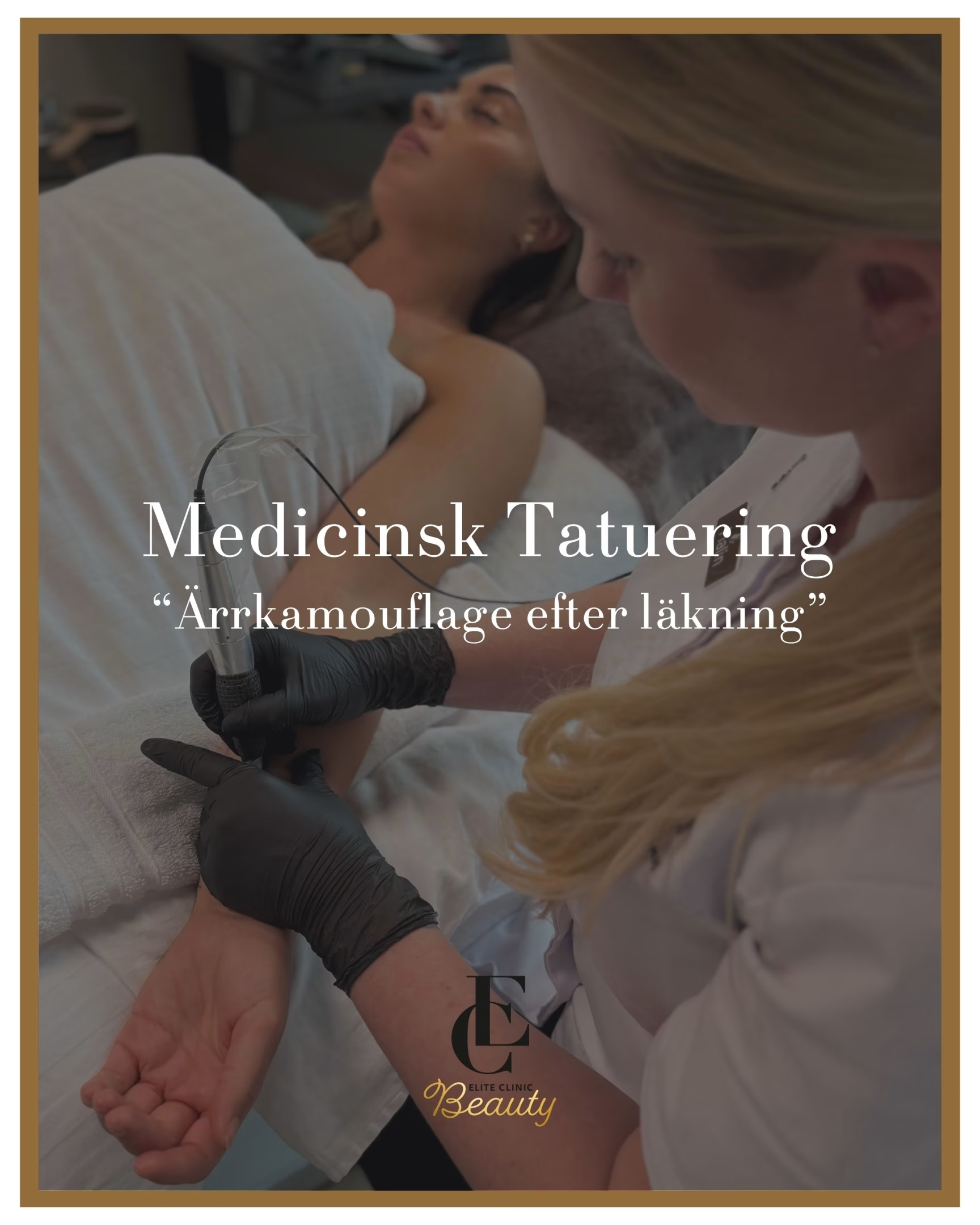
Medical tattoo for self-harm scars – Scar camouflage after healing.
Frequently asked questions about medical tattooing and scar camouflage
Can you get a tattoo over self-harm scars?
Yes, if the scars are fully healed and deemed suitable for treatment. An individual consultation is always required before a decision is made.
Does medical tattooing work on white scars?
Yes. White scars are often one of the most common reasons for seeking scar camouflage. However, results vary between individuals.
Does medical tattooing hurt?
The experience varies depending on the individual, the area of skin and the nature of the scar. Most describe the treatment as manageable.
How long does scar pigmentation last?
The results are long-lasting but may need to be maintained over time. Skin type, sun exposure and the body's individual processes affect durability.
Can all self-harm scars be treated?
No. Some scars may not be suitable for pigmentation, so consultation and professional assessment are always required before treatment.
When can I book treatment?
Only when the scars are fully healed and stable. In most cases, it is recommended that at least 12 months have passed since the injury occurred.
For many who have lived with self-harm, scars can be a constant reminder of a difficult period in life. Once the scars are fully healed and recovery is well underway, medical tattooing, also known as scar camouflage or paramedical micropigmentation, can be an option to reduce the visibility of scars and create a more even skin tone.
The goal of the treatment is not to make the scars disappear completely, but to make them less prominent by adapting the pigment to the surrounding skin.
Living with self-harm scars.
Self-harm scars can affect both self-esteem and well-being. Many people choose to cover their arms, legs or other body parts to avoid questions or attention from those around them.
It is important to remember that scars do not define a person. For many, they are a sign of a period that has passed and an ongoing journey towards recovery and healing.
For those who wish to reduce the visibility of scars, scar pigmentation and medical tattooing for self-harm scars may be an option once the skin has fully healed.
What is medical tattooing?
Medical tattooing, also called paramedical tattooing or micropigmentation, is a treatment where specially adapted pigments are introduced superficially into the skin to camouflage scars and color differences.
When treating self-harm scars, the pigments are carefully matched to your natural skin tone to make the scars blend in better with the surrounding skin.
How does scar camouflage work?
During a consultation, a careful assessment of the appearance, structure and degree of maturity of the scar is first made.
Then:
- Skin tone is analyzed
- Pigments are selected for the best possible color match
- Pigment is gently introduced into the skin
- The healing process is followed up as necessary.
The results develop gradually over several weeks after treatment.
The goal is to create a more natural skin appearance where scars become less visible in everyday life.
When can self-harm scars be treated with medical tattooing?
Medical tattooing should only be performed on scars that are fully healed and stable.
In most cases, the scar needs to be:
- At least 12 months old
- Bright and fully healed
- Free from inflammation
- Stabilized in color and structure
Each person heals differently, so an individual assessment is always made before treatment begins.
What scars can be treated with medical tattooing?
Medical tattooing, also called scar camouflage or paramedical pigmentation, can be used for many different types of healed scars where the skin has taken on a lighter color or a clear color difference compared to the surrounding skin.
The treatment may be suitable for:
Self-harm scars
Healed self-harm scars that are stable and fully healed can often be camouflaged with pigment matching to reduce the contrast against the surrounding skin.
Facelift scars (Facelift scars)
Scars after a facelift, facelift or other aesthetic facial surgery can in many cases be treated with medical tattooing. The pigments are individually adjusted to help the scars blend in better with the surrounding skin tone.
Surgical scar
Scars from surgical procedures, such as cesarean sections, abdominoplasty, breast surgery, or orthopedic surgery, can often be treated once they are fully healed.
Breast surgery scars
Scars after breast augmentation, breast lift, breast reduction or breast reconstruction may be suitable for scar camouflage after individual assessment.
Burn scars
Some healed burns can be treated to create a more even skin tone and reduce visible color differences.
Abdominoplasty scar
Abdominoplasty scars are one of the most common scars treated with medical tattooing once the healing process is complete.
Cesarean section scar
Healed cesarean section scars can in many cases be camouflaged to reduce the visibility of the scar.
Scars from skin injuries or accidents
Scars that have arisen after injuries, wounds or accidents can sometimes be treated if the skin is stable and fully healed.
White or light scars
Medical tattooing is specifically developed for scars that have lost their natural pigment and have therefore become white or significantly lighter than the surrounding skin.
Benefits of medical tattooing for self-harm scars.
Many people find that the treatment provides:
- Less visible scars
- Even skin tone
- Increased confidence in social situations
- Reduced concern about the appearance of scars
- A more harmonious overall impression
For many, treatment is about more than aesthetics. It can be part of leaving a previously difficult period behind.
A safe and professional treatment process.
We work with a focus on safety, realism and individual conditions.
The treatment includes:
- Individual consultation
- Assessment of scar healing rate
- Skin tone analysis
- Pigment adaptation
- Treatment
- Follow-up and aftercare advice
We always inform you about both possibilities and limitations before treatment.
Important to know
Medical tattooing is not a treatment for ongoing self-harm. The treatment is intended for people who are in a stable phase of their recovery and whose scars are fully healed.
Results vary between individuals depending on skin type, the nature of the scar, and the body's healing ability.
Conclusion
Medical tattooing for self-harm scars, also known as scar camouflage or scar pigmentation, can be an option for people who want to reduce the visibility of healed scars. Through customized pigments and careful color matching, skin tone can be perceived as more even and scars can be less prominent.
A professional consultation and individual assessment are always the basis for creating safe and realistic results.
Do you want to know if your scars can be treated? Here you can read more
Book a consultation for an individual assessment of your scars and receive professional guidance on the possibilities of medical tattooing and scar camouflage.